


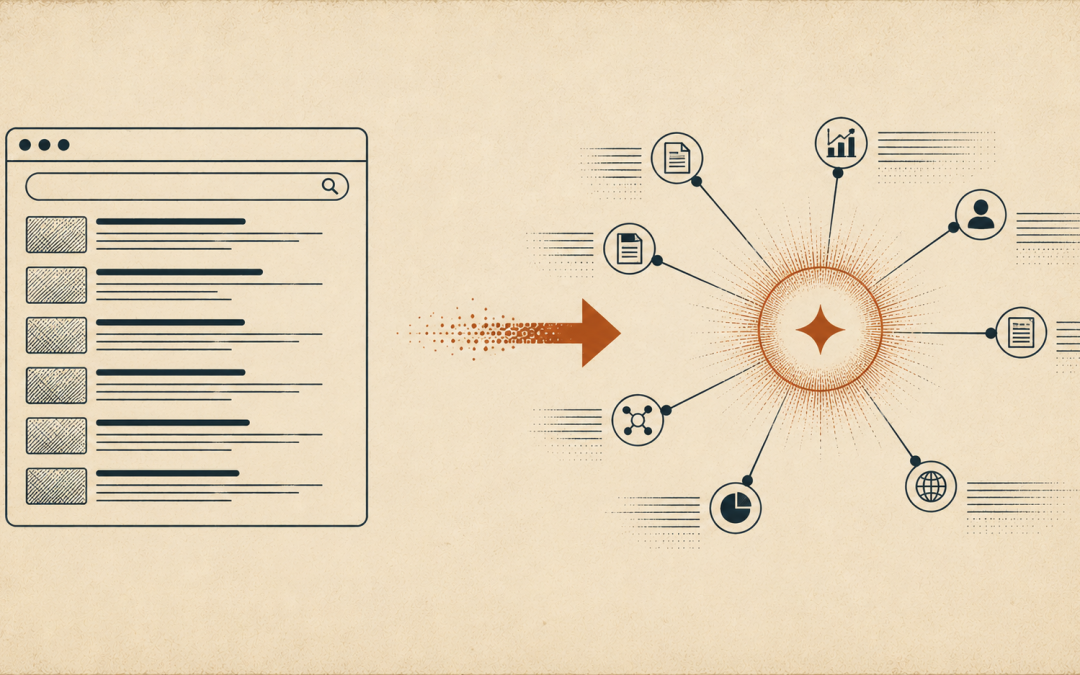
WITG’s Remote Work Strategy: Beyond the VPN
A VPN was never built to secure a fully distributed workforce — it was built to let one or two remote employees reach the office network. In 2026, that gap has become a liability most businesses can’t afford to ignore.
The 2026 Remote Work Challenge
Hybrid work isn’t a temporary arrangement anymore — it’s the default. Robert Half reports that 88% of U.S. employers now offer at least some form of hybrid work, and the majority of remote-capable employees split their time between home and office on an ongoing basis.
That permanence is exactly the problem. A VPN was designed as a stopgap, not a long-term security architecture. It creates an encrypted tunnel into the network, but it doesn’t check whether the device connecting through that tunnel — or the home network it’s sitting on — is actually safe. Zscaler’s ThreatLabz 2025 VPN Risk Report found that 56% of organizations experienced a breach tied directly to VPN vulnerabilities in the past year alone — which is why 65% of enterprises now plan to replace their VPN infrastructure entirely.
The WITG Solution: Four Gaps, Four Fixes
At Western I.T. Group, we treat remote work security as an architecture problem, not a single tool. Below is how we address the four biggest gaps a VPN-only setup leaves open.
| The Risk | The WITG Solution |
|---|---|
| The “Home Network” Risk | Zero-Trust Access |
| Hardware Bottlenecks | Virtual Desktop Infrastructure (VDI) |
| “Shadow IT” & Data Leaks | Managed Cloud Ecosystems |
| Support for the “Hybrid” Team | Turnkey Hardware Deployment |
1. The “Home Network” Risk → Zero-Trust Access
Zero-trust access is a security model that verifies every user and device by identity and context before granting access to a specific resource — rather than trusting anything just because it’s connected through the network. We implement identity-based security so that a compromised home router doesn’t automatically mean a compromised business server. Every request is checked on its own merits, every time, regardless of where it’s coming from.
2. Hardware Bottlenecks → Virtual Desktop Infrastructure (VDI)
Virtual Desktop Infrastructure (VDI) hosts a full desktop environment on a central server and streams it to whatever device an employee is using. By leveraging our in-house servers, we can host high-performance virtual desktops, allowing employees to run heavy applications — CAD software, large datasets, resource-intensive tools — on any device, including a basic laptop that couldn’t handle the workload on its own.
3. “Shadow IT” & Data Leaks → Managed Cloud Ecosystems
Shadow IT happens when employees turn to unauthorized apps or personal cloud storage just to get their work done — usually because the approved tools feel slower or more restrictive. We build and monitor secure, collaborative managed cloud ecosystems where data stays within your control, even when the team is spread across time zones and countries.
4. Support for the “Hybrid” Team → Turnkey Hardware Deployment
A distributed team still needs physical hardware managed somewhere. We handle turnkey hardware deployment — procurement, setup, and remote-wipe capabilities — for every company-issued laptop and device, whether it’s shipping to a new hire’s home or being decommissioned when someone leaves.
Why a Layered Remote Work Strategy Beats a Single Tool
None of these four pieces work as well in isolation. Zero-trust access without managed hardware still leaves devices unaccounted for. VDI without cloud governance still risks data sprawl. The reason a VPN alone fails in 2026 is the same reason no single replacement tool fully fixes it either — remote work security is a system, not a product. That’s the strategy behind everything WITG builds for hybrid teams: security, performance, and data control working together instead of bolted on separately. For a closer look at how these same zero-trust principles extend to AI tools specifically, see our guide on building cyber-resilient AI in the enterprise.
Frequently Asked Questions
Why isn’t a VPN enough for remote work security anymore?
A VPN only encrypts the connection — it doesn’t verify whether the device or network on the other end is actually safe. If an employee’s home network or router is compromised, the VPN can hand an attacker a direct path into company systems.
What is zero-trust access?
Zero-trust access is a security model that verifies every user and device based on identity and context before granting access to specific resources, rather than assuming anything inside a network connection can be trusted by default.
What is Virtual Desktop Infrastructure (VDI)?
VDI hosts a full desktop environment on a central server, letting employees run high-performance applications by streaming the interface to any device, rather than relying on the processing power of their local laptop.
What is shadow IT and why is it a risk for remote teams?
Shadow IT refers to employees using unauthorized apps or personal cloud storage to get work done, outside of company oversight. It creates data leak risk because sensitive information ends up stored in tools IT never approved or secured.
Ready to move your team’s remote work strategy beyond the VPN? Contact Western I.T. Group to talk through your environment.